A crypto debit card is a normal Visa or Mastercard that spends the balance you hold on an exchange. At checkout the exchange sells the coins and the shop gets fiat. What changes from card to card is where you can get one: most are limited to the EEA or the UK, a handful reach dozens of countries, and Binance’s is open to Brazil only. Below, the cards of the exchanges in the eTop ranking are compared side by side, followed by a closer look at Bybit Card and WhiteBIT Nova.
Crypto debit cards compared: cashback, fees, availability
| Card | Availability | Cashback | Cost | Apple Pay | Google Pay | Pays with | Exchange | Get the card |
|---|---|---|---|---|---|---|---|---|

|
EEAYesElsewhereSouth Asia | by VIP level | 0.1% spread | ✓ yes | ✓ yes | USDC, USDG | 9.3 / 10MiCA | |

|
EEAUnclearElsewhere50+ countries | up to 10% | virtual card free | ✓ yes | ✓ yes | USDT, USDC, BTC, ETH & more | 9.1 / 10MiCA | |

|
EEAYesElsewhereLimited | up to 10% | €0 to issue and run | ✓ yes | ✓ yes | 11 assets | 8.2 / 10MiCA | |

|
EEAYesElsewhereUnclear | up to 8% | ATM 2% | ✓ yes | ✓ yes | — | 7.4 / 10MiCA |
|

|
EEAUnclearElsewhereUnclear | — | €1 a month | — | — | USDT, USDC, BTC, ETH | 7.4 / 10MiCA | |

|
EEAYesElsewhereNo | — | — | ✓ yes | ✓ yes | 54 currencies | 7.3 / 10MiCA | |

|
EEAYesElsewhereUK | up to 2% | no Kraken fees | ✓ yes | ✓ yes | 600+ assets | 7.2 / 10MiCA | |

Binance
Binance Card
|
EEANoElsewhereBrazil only | — | — | — | — | — | 8.5 / 10No MiCA |
|
Hover over availability, cashback or cost for the conditions and caveats.
Data was collected by hand from the exchanges’ official pages as of October 6, 2026. Card terms and country lists change, so confirm them in the exchange app before applying.
“Unclear” means the official pages do not settle the question. A dash means the official page does not state that detail.
Cards are not scored: terms depend on your country, account tier and promotions, so a single number would mislead.
How exchanges are scored →
Bybit Card vs WhiteBIT Nova: key differences
Bybit Card and WhiteBIT Nova have the widest country coverage in the table: 50+ countries and 31 according to the exchanges themselves. Both support Apple Pay and Google Pay, so the choice comes down to where you live, how cashback is earned and what the card costs.
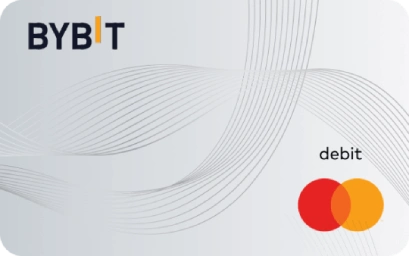 Bybit Card |
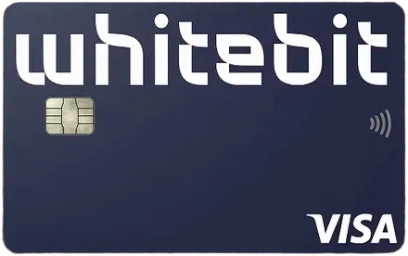 WhiteBIT Nova |
|
|---|---|---|
| Network | Visa or Mastercard, depending on your country | Visa (debit) |
| Issuer | Not stated on the official pages | Wallester AS (Estonia), authorized by the Finantsinspektsioon; Visa principal member |
| Format | Virtual card (free, issued after approval) and physical card | Virtual and physical (physical delivery €12) |
| Where it works | 50+ countries according to Bybit; EEA status unclear (see below) | EEA countries (new users sign up at whitebit.eu), plus one non-EEA country on the official list |
| Cashback | Up to 10% in crypto; earned on crypto spending only | Up to 10% in BTC or WBT, three chosen categories, capped at €25 a month |
| Cost | Virtual card free, no monthly fee; transaction and FX fees vary by tier | €0 to issue, run and top up; physical delivery €12 |
| Pays with | Up to three coins of your choice; default order USDT, USDC, BTC, ETH, MNT, GRAM, XRP | USDC, BTC, ETH, XRP, SOL, NEAR, ADA, AVAX, WBT, EURI, DOGE |
| Apple Pay and Google Pay | Yes, for the virtual card | Yes |
| Limits | Depend on verification level and card tier | Not stated on the official page |
| Exchange score | 9.1 / 10, MiCA (Austria) · review | 8.2 / 10, MiCA (Austria) · review |
| Watch out for | A footnote on Bybit’s card page says the product is not meant for EEA customers | whitebit.com has paused new EEA sign-ups; EEA users go through whitebit.eu |
| Get the card |
Both advertise up to 10% cashback, but they get there differently. Bybit’s rate depends on a card tier you check in the app, while WhiteBIT pays its top rate only in the categories you pick and stops at €25 a month. Do not choose on cashback alone. Look at the exchange behind the card first: fees, license and support are covered in the exchange ranking.
Crypto card FAQ
What is a crypto card?
A crypto card, also called a cryptocurrency card or crypto debit card, is a regular Visa or Mastercard tied to an exchange account instead of a bank balance. When you pay, the exchange sells the coins you have chosen at that moment and the merchant receives fiat. Most of the cards here call themselves debit cards: they spend a balance you already hold and do not lend you money.
What is the best crypto card?
Availability decides first, so start by checking which cards your country can actually get. After that, headline cashback is a poor tiebreaker: Bybit and WhiteBIT Nova say up to 10%, Gate up to 8% and Kraken up to 2%, but each comes with tiers, categories or monthly caps. For the best crypto debit card in your case, compare fees, the coins you can spend and any caps. The table above lets you filter by region.
Is a crypto card a debit or a credit card?
Bybit, WhiteBIT, Kraken, Gate and BingX describe their cards as debit cards, which means you spend a balance you already hold. None of the official pages checked describes a credit line. If you are searching for a crypto credit card, these exchange cards are not that product.
How do I load a crypto card?
It depends on the exchange. Bybit’s card spends from your Funding Account, so that is the balance to top up. OKX pays from stablecoins held in an OKX Pay account, and Kraken from its Krak Everyday balance. BingX takes deposits in USDT, USDC, BTC or ETH and converts them to euros inside the card balance. Whatever the route, check the conversion rate and fees in the app before the first payment. To get funds onto the exchange first, see how to buy crypto with a card, bank transfer or P2P.
Bybit Card: cashback, fees and availability
Bybit’s card page advertises 2%–10% cashback paid in crypto, a free virtual card and no monthly fee. Transaction and foreign-exchange fees vary by tier, and only crypto spending earns cashback, not spending from a fiat balance. The card works with Apple Pay and Google Pay, and a physical card can be ordered. Bybit says it is available across 50+ countries, but a footnote excludes EEA customers, so confirm eligibility in the app first. More in the Bybit review.
WhiteBIT Nova: how much does it cost?
WhiteBIT Nova is a debit Visa issued by Wallester AS, an Estonian payment institution authorized by the Finantsinspektsioon. Issuing, maintenance, top-ups, closing and inactivity cost €0; only the physical card’s €12 delivery and a €5 reactivation after three idle months are charged. Cashback goes up to 10% in BTC or WBT across up to three categories you choose each day, capped at €25 a month. More in the WhiteBIT review.
Binance Card: is there a Binance crypto card?
Not for most people at the moment. Binance’s card page, checked on October 6, 2026, lists Brazil as the only supported country. If you want a card from a large exchange, Bybit, OKX and Kraken are the ones in the table with confirmed availability, depending on your region.
Which crypto card works in Europe?
Five cards in the table are offered in the EEA: WhiteBIT Nova (new users sign up at whitebit.eu), OKX Card (EU and Norway), Krak Card (UK and EEA), KuCard (EEA except Malta) and Gate Card, which Gate’s announcements put in 28 to 29 EEA countries. Bybit’s own page is contradictory for the EEA, and BingX does not list supported countries, so check both in the app before applying.
Visa or Mastercard crypto card: which network is better?
For everyday payments it makes little difference, since both networks are accepted almost everywhere. Krak Card and OKX Card run on Mastercard, WhiteBIT Nova and KuCard on Visa. Bybit and Gate issue either one depending on your country, and BingX’s FAQ describes a euro Mastercard. Pick the card by availability, cashback rules and fees rather than the logo.
Do crypto cards work with Apple Pay and Google Pay?
Yes for most of them. Bybit, WhiteBIT Nova, OKX, Kraken, KuCard and Gate all say the card can be added to Apple Pay or Google Pay, which makes the virtual card usable at checkout. The BingX pages checked do not mention wallets. Paying by phone also needs a device with NFC.
What are the fees on a crypto card?
Issuing a virtual card is free at Bybit and WhiteBIT. Beyond that, the costs sit in conversion and ATM fees: OKX charges a 0.1% market spread and no other transaction or FX fee, Gate 2% at ATMs and 0.40% on non-USD payments, and BingX €1 a month plus 1% on deposits and 2% on payments outside the EEA. Kraken adds no fees of its own, though ATM operators may. Bybit’s fees depend on your tier.
How does crypto card cashback work?
Cashback returns a share of what you spend, usually in crypto: BTC or WBT at WhiteBIT, USDG at OKX, BTC or fiat at Kraken. The headline rate is a maximum. WhiteBIT pays 10% only on subscriptions and stops at €25 a month, while Kraken’s 2% needs an average balance of €50,000. OKX says standard users may get no ongoing cashback after the launch promotion. Check the tier, category and cap before you count on a number.
What are the benefits of a crypto card?
The main draw is spending crypto without cashing out to a bank first. Some cards add cashback (up to 10% in crypto at Bybit and WhiteBIT, up to 2% at Kraken) and a virtual card you can add to Apple Pay or Google Pay. The trade-offs are conversion fees or spreads, caps on rewards, regional limits and, in many countries, tax on each payment, since every purchase is a sale of crypto.
Do I need to verify my identity to get a crypto card?
Yes. Bybit asks for identity verification, WhiteBIT and BingX run KYC, Kraken issues cards to verified users and KuCard needs an EEA-issued ID. None of the official pages checked offers a way around verification.
Is it safe to pay with a crypto card?
The card is just a way to spend your exchange balance, so the exchange account is the weak point. Turn on two-factor authentication, keep only what you plan to spend and never share verification codes. Paying with crypto can also be a taxable event in many countries, so check the local rules. This is not financial advice; see the risk disclaimer.
Data sources: official pages and help centers of Bybit, WhiteBIT, OKX, Kraken, KuCoin, Gate, BingX and Binance, as of October 6, 2026.